
By Shanna Harding, Food Scientist and Certified Postpartum Doula, Resting Rituals
I ate peanut butter toast over the sink because it meant one less thing to clean up. Some days it was a chicken wrap. Same wrap, three days in a row, because it required zero thought and I had nothing left to give. The weight was dropping off fast and honestly, part of me didn’t mind the comments. Who doesn’t want to hear they look great? But I knew. I knew it wasn’t the good kind of weight loss. My body wasn’t thriving. It was disappearing.
I have a food science degree. I understood, on a cellular level, what nutrients do in the body. I knew the research. And postpartum still knocked me, because knowing and doing are two entirely different things when you’re surviving on four hours of broken sleep and nobody has told you the one thing that would have changed everything.
Your body needs more nutrition after birth than it did during pregnancy. Not the same. Not a little less because the baby is out now. More.
This is the thing nobody tells you. And it changes everything.
The assumptions most mothers make.
During pregnancy, most of us become acutely nutrition-aware. We take our prenatals, cut the soft cheese, read the labels, think carefully about what we’re putting in our bodies because we understand it matters for the baby growing inside us.
Then the baby arrives. And the focus shifts entirely to the newborn. Our own focus, and everyone else’s.
The mother, who has just done the most physiologically demanding thing a human body can do, quietly drops to the bottom of the priority list. Often her own priority list.
We tell ourselves we’ll eat properly once things settle. We choose sleep over meals, and yes, sleep matters enormously, but these don’t have to be in competition. We accept whatever is easiest, fastest, least complicated. And we do this at the exact moment our bodies are screaming for more.

The science: why your needs are higher postpartum than pregnant
This isn’t a theory. It’s physiology.
During pregnancy, your body transferred enormous quantities of nutrients to your growing baby. Iron. Zinc. Iodine. DHA. Folate. Calcium pulled directly from your bones. Your body deprioritised its own stores to build that baby, which is exactly what it was designed to do.
Then birth happens. Whatever your experience looked like, it is a significant physiological event. Blood loss. Tissue repair. Hormonal shifts of a magnitude your body has never experienced before. Your oestrogen and progesterone levels drop faster after birth than at any other point in human biology.
And then, if you’re breastfeeding, your body takes on the additional task of producing milk. Something researchers describe as nutritionally expensive. Breastfeeding alone requires an additional 330 to 500 calories per day above your pre-pregnancy baseline. Not your pregnancy baseline. Your pre-pregnancy one.
Evidence-based requirements for protein during lactation sit at 1.7 to 1.9 grams per kilogram of body weight daily, significantly higher than recommendations for non-lactating women and higher than pregnancy requirements. Your body needs protein for tissue repair, milk synthesis, and immune recovery, all happening simultaneously.
Registered dietitian Lily Nichols, whose work on real food nutrition in the perinatal period is among the most rigorously researched available, puts it plainly: your nutrient needs are actually higher during early postpartum than during pregnancy. Your body is doing more, not less, in those early weeks. And most mothers are eating significantly less than they need, not because they don’t care, but because nobody told them.
What happens when those needs aren’t met
Dr Oscar Serrallach is an Australian functional medicine doctor who has spent over a decade working with mothers experiencing what he calls postnatal depletion. A state of physical and emotional exhaustion resulting from the prolonged demands of pregnancy, birth, breastfeeding, and early parenting in an environment that offers inadequate recovery support.
His findings are sobering. The symptoms of postnatal depletion, fatigue, brain fog, hair loss, anxiety, low mood, hormonal imbalance, that deep sense of not feeling like yourself, are not inevitable. They are the predictable result of a body that has given everything and been given very little back.
A mother’s brain changes significantly during pregnancy as the placenta draws on essential nutrients she needs to remain well. Without replenishment, that depletion compounds. Serrallach has treated mothers still experiencing the effects of postnatal depletion seven years after their babies were born, not because something was clinically wrong with them, but because their reserves were never restored.
The research on specific micronutrients makes this concrete. A systematic review found that deficiencies in vitamin D, vitamin B12, and zinc are linked to significantly increased risk of postpartum depression. A separate review found that in four out of five clinical trials, iron supplementation in the postpartum period was associated with lower risk of depression. These are not supplements. These are nutrients that should be coming primarily from food, and that most postpartum mothers are not getting enough of.
The five nutrients most commonly depleted after birth:
Iron: Lost through blood during delivery, and essential for energy, concentration, and mood. Deficiency is the most common nutritional problem in postpartum women worldwide and one of the most under diagnosed causes of new-mother fatigue.
Vitamin D: Deficiency is highly prevalent during lactation. Current evidence suggests many breastfeeding mothers need significantly more than standard recommendations to maintain adequate levels.
Omega-3 fatty acids (DHA): Transferred to the baby during pregnancy and through breast milk, DHA supports mood stability and brain function. Depletion is directly linked to increased risk of postnatal depression.
Vitamin B12: Critical for neurological function and energy. Low levels are associated with brain fog, fatigue, and mood disturbance, symptoms that are frequently dismissed as just part of new motherhood.
Protein: Not just a macronutrient. Protein is the raw material your body uses to repair tissue, synthesise hormones, produce milk, and support immune function. Most postpartum mothers are significantly under eating protein without realising it
What this looked like in my own body
I dropped weight fast after my first baby. People noticed. Nobody questioned whether that was healthy. In our culture, weight loss after birth is treated as a success story.
What was actually happening was that my body was drawing on its own reserves to keep functioning. The brain fog I put down to sleep deprivation. The flatness I assumed was just adjustment. The way I felt like I was running on a kind of slow, steady empty. I didn’t have a name for it then.
I do now.
And the thing I know, both from the science and from having been there, is that it didn’t have to be that way. Not because I needed to cook elaborate meals or follow a complicated plan. But because even small, well-structured meals, prepared in advance, requiring no decision-making in the moment, change the way you show up. Your energy. Your milk supply. Your capacity to be present. Your ability to feel like yourself rather than a version of yourself that’s been quietly hollowed out.
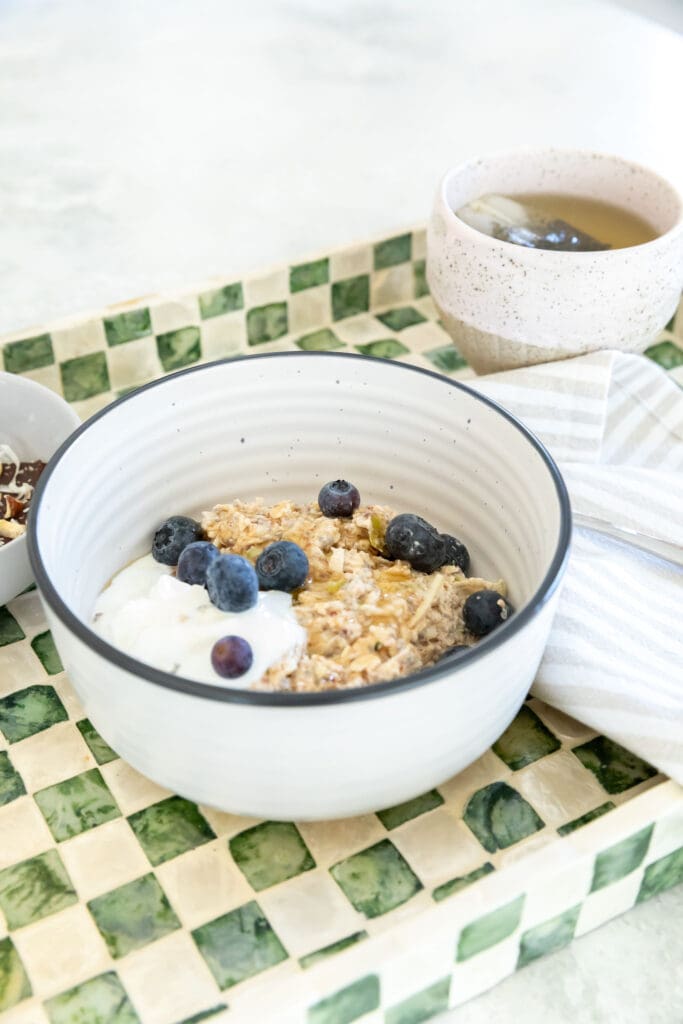
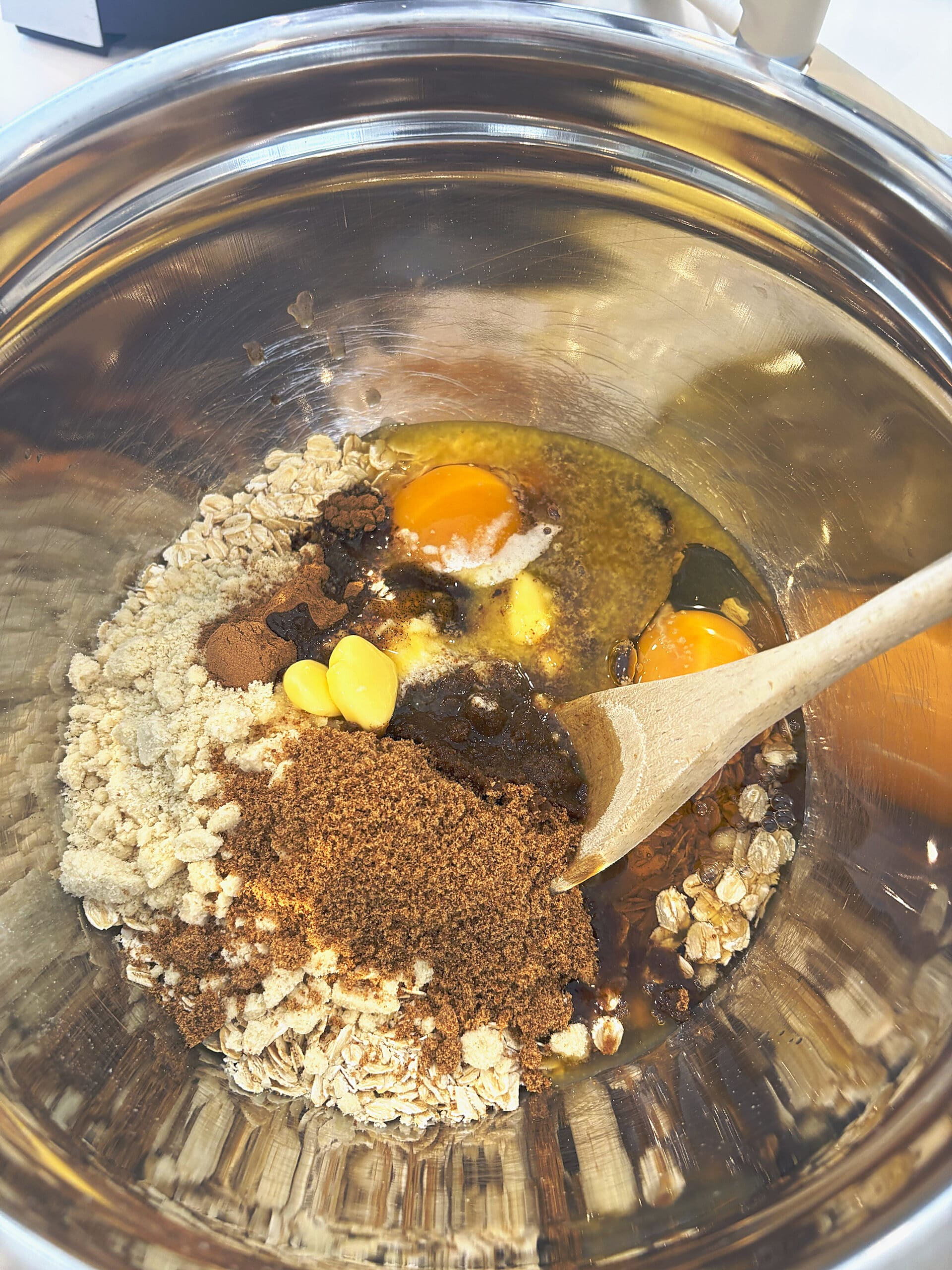
A warm bowl of oats made with broth, an egg stirred through, flax, quinoa, a little maple syrup. The gap between that and peanut butter toast over the sink isn’t effort. It’s planning.
The practical: what your body actually needs
The goal in postpartum nutrition is not perfection. It is not a meal plan you’ll never follow or a supplement stack you can’t afford. It is consistent, warming, easy-to-digest nourishment that your depleted body can actually absorb and use.
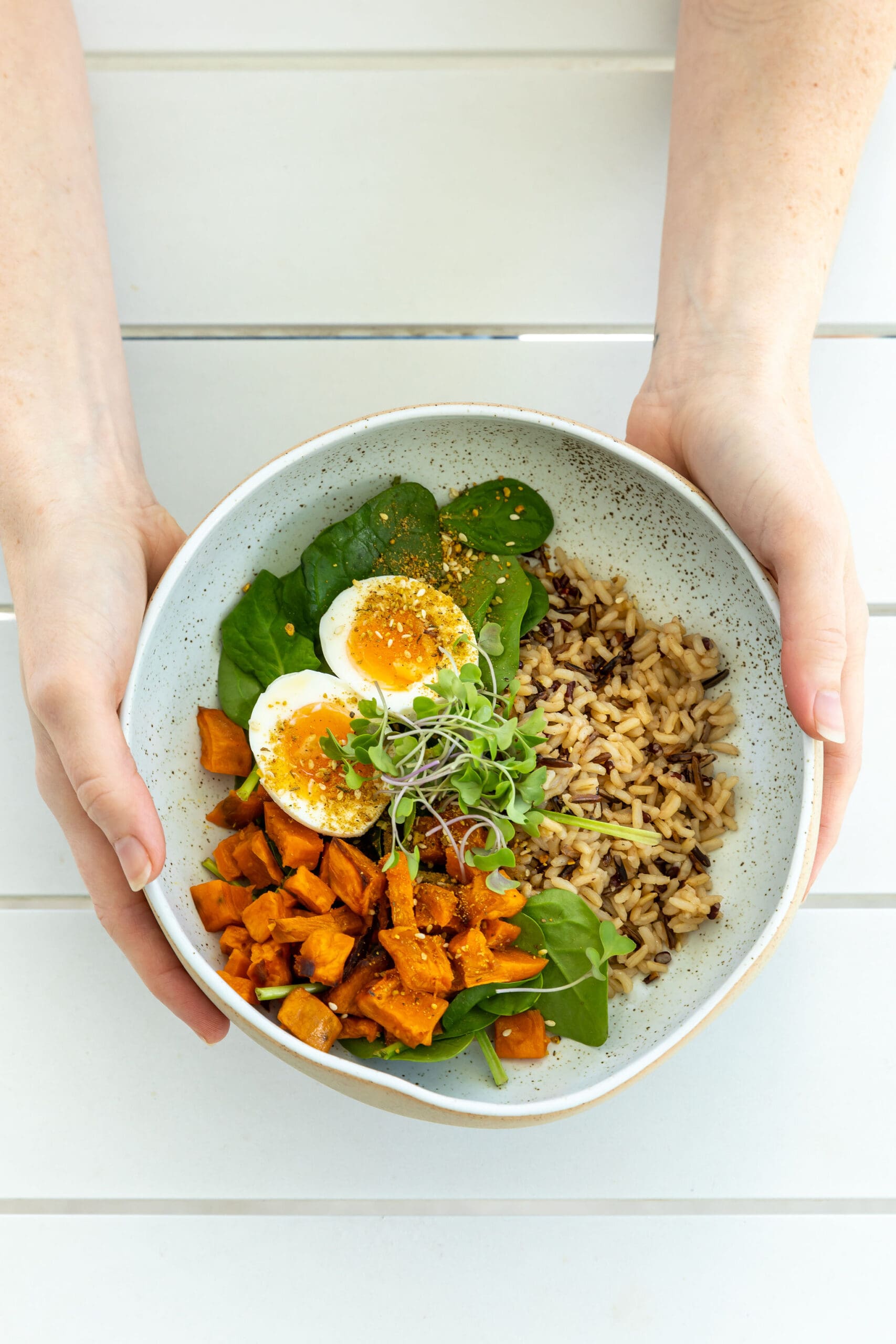
Warming, easy-to-digest foods: Soups, stews, congee, dahl, slow-cooked meats, bone broth. These are the foods traditional cultures have prescribed to postpartum mothers for centuries, not by accident, but because experience and now science confirm they work. Warm food is easier for a taxed digestive system to process. It supports circulation. It is genuinely nourishing in a way that cold, processed, or convenience food simply is not.
Protein at every meal: Eggs, slow-cooked meats, legumes, fish, Greek yoghurt. Aim for protein you can prepare in advance or grab without thinking. Hard-boiled eggs in the fridge. Shredded chicken in a container. Canned salmon requiring nothing but a fork.
Iron-rich foods: Red meat, dark leafy greens, legumes, fortified grains. Pair with vitamin C to support absorption. Avoid tea and coffee immediately after iron-rich meals, which can inhibit uptake.
Healthy fats: Avocado, olive oil, nuts, oily fish. These support hormone production, mood, and the absorption of fat-soluble vitamins including D and A.
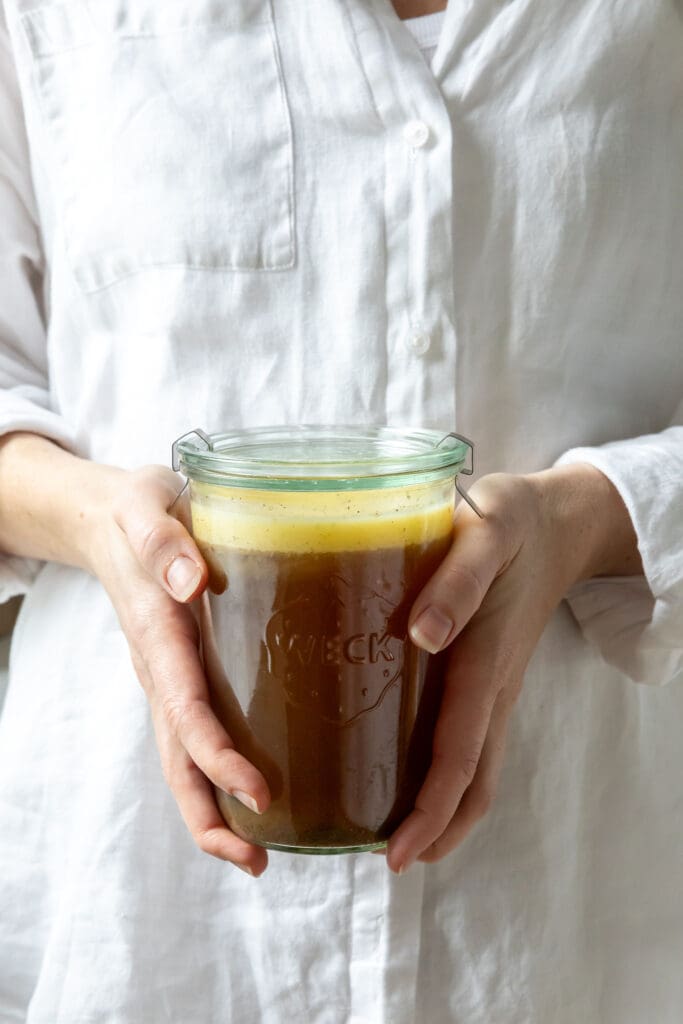
Bone broth: Rich in collagen, glycine, and minerals, bone broth supports gut health, tissue repair, and joint recovery. Sip it warm, use it as a cooking liquid, stir it through congee or risotto.
A quality postnatal supplement: Food first, always. But given how difficult it is to meet postpartum nutrient requirements through diet alone, especially in the fog of those early weeks, a postnatal supplement covering iron, vitamin D, B12, omega-3s, and zinc is a sensible safety net. Worth talking to a naturopath or dietitian who specialises in postnatal nutrition about what’s right for your body specifically.
The thing I want you to take from this
You already know that what you eat matters. You proved that during pregnancy.
What I want you to know is that it matters just as much now, if not more. That the fatigue you’re feeling may not be purely about sleep. That the brain fog, the flatness, the sense of not quite being yourself, these have a biological explanation and a biological solution.
The solution is not complicated. It is not about being a perfect postpartum mother who has her meals sorted and her nutrition optimised.
It is about understanding what your body actually needs, and making a plan before the fog sets in, so that when you’re tender and tired and adjusting to the biggest transition of your life, the nourishment is already there.
The Ritual of Nourishment is almost finished. I’m hoping to have it in your hands by July.
It’s the exact meal plan I built for my own second postpartum. I tested every recipe in my own kitchen, in my own fourth trimester, with a toddler to feed at the same time. That’s actually what made it better. Skipping meals wasn’t an option, so the plan had to work in real life, not just on paper.
Having a stocked freezer and a structure meant that when people offered to help, I finally knew what to say yes to. Day to day felt easier. Not because the second postpartum was without hard moments, but because I wasn’t starting from nothing every time I got hungry.
It’s also exactly what I cook for my clients now, simplified so you can do it yourself. You don’t need me in your home to eat the way you deserve. You just need a plan, a slow cooker, and a well-stocked freezer.
Ready to start planning? The Ritual of Nourishment ebook is $29. Or if you’d like to talk through your postpartum nutrition and planning personally, a 1:1 session is a beautiful place to start.






Comments +